The PFAS Pesticides Problem
What Are PFAS?
PFAS — aka perfluoroalkyl and polyfluoroalkyl substances — are a large, diverse group of manmade chemicals that have multiple, strong carbon-fluorine bonds, making them “highly fluorinated” compounds. They’re commonly called “forever chemicals” because they’re some of the most persistent synthetic substances on the planet. Besides many being highly toxic, all PFAS take pretty much forever to break down. Many have decades- or centuries-long “half-lives” — the time it takes for half of what’s put into the environment to break down — and can stick around in the environment for generations.
When they finally do break down, most PFAS degrade into smaller forever chemicals. One of those is called trifluoracetic acid, or TFA; it’s dangerous to aquatic life and one of the most pervasive PFAS water pollutants on Earth. Researchers say the world is exceeding what’s known as a “planetary boundary threat” with TFA, where societal health harms can quickly become irreversible. TFA has a half-life of several hundred years or more.
As you can imagine, PFAS are a big problem for wildlife, people, and the planet.
PFAS in Pesticides
You may have heard of PFAS being used to make products resistant to water, stains, and grease. You may not know they’re also active ingredients in a long list of pesticides sprayed in the United States on everything from golf courses and lawns to a wide variety of food crops, including apples, oranges, lettuce, spinach, tomatoes, broccoli, bell peppers, cucumbers, peaches, almonds, wheat, and oats.
That’s right: These pesticides are purposefully sprayed on food we eat. And those chemicals end up in on our food, across the U.S. landscape, and in water sources — including drinking-water sources.
In 2024 a peer-reviewed report by researchers at the Center for Biological Diversity, Environmental Working Group, and Public Employees for Environmental Responsibility found that pesticide manufacturers are increasingly adding PFAS to U.S. products — partly to lengthen the timespan of the pesticides’ killing properties. We discovered that 14% of all conventional pesticide active ingredients are now PFAS, and the chemicals make up 30% of pesticide active ingredients approved in the past 10 years. (That’s in addition to accidental contamination, since 20% to 30% of plastic pesticide and fertilizer containers are fluorinated and can leach PFAS into the containers’ contents.)
When all those “forever pesticides” are applied to crops, they contaminate soil, water, and the tissues of the plants they’re used on — eventually entering human bodies.
Check out our FAQ on PFAS pesticides.
The Threat
PFAS are an enormous class of chemicals, numbering in the tens of thousands. That means that they can differ in certain chemical properties, like toxicity and bioaccumulation.
In general PFAS pesticides don’t share the same bioaccumulative properties and toxicities associated with infamous PFAS like perfluorooctanoic acid (PFOA) and perfluorooctanesulfonic acid (PFOS). But PFAS pesticides still have very worrisome toxicities to humans and wildlife and a high potential to pollute waterways across the country.
PFAS pesticide exposure is associated with harm to our immune systems, cancer, reproductive problems, and neurotoxicity (damage to the nervous system). Infants, young children, and the developing fetus are often much more sensitive to chemical pollutants than adults, making this the most vulnerable population to pesticide harm. All PFAS pesticides are extremely persistent in the environment or break down into smaller PFAS that are extremely persistent. Many are found in rivers, lakes, and streams across the United States, and most break down into incredibly persistent TFA (see above).
Many PFAS pesticides are extremely toxic to pollinators and are found in pollen and nectar samples surrounding sprayed areas. One out of every 3 bites of food we eat — and nearly all nutrient-dense foods like fruits and vegetables — come from plants that need to be pollinated by bees and other pollinating animals. That means PFAS pesticides (and many other pesticides) are threats to a safe, nutritious food supply.
Trump Administration Threats
Despite posturing on its commitment to tackling PFAS pollution, President Donald Trump’s U.S. Environmental Protection Agency has resoundingly failed to crack down on PFAS pesticides. In fact, thanks to influence from the pesticide industry, it has moved in the opposite direction. Under the second Trump administration, the EPA’s pesticide office is controlled by Kyle Kunkler, a former lobbyist for the pro-pesticide American Soybean Association. Kunkler works under two former lobbyists for the American Chemistry Council, Nancy Beck and Lynn Dekleva. They’re overseen by a fourth industry lobbyist, Doug Troutman, who was recently confirmed to lead the chemicals office following an endorsement by the chemistry council.
In the administration’s first year alone, the EPA approved multiple PFAS pesticides for use on golf courses, lawns, and food crops, including lettuce, tomatoes, peaches, and asparagus. Many more are in the pipeline for approval.
Given that industrial-scale farming uses about 1 billion pounds of pesticide active ingredients annually, every EPA approval of a PFAS pesticide creates an increasingly effective system for dispersing more forever chemicals across the U.S. landscape.
Our Campaign
For years the Center has been a leader in fighting PFAS in pesticides. Our 2024 study was the first-ever comprehensive review of the many ways PFAS are introduced into U.S. pesticide products. We’ve petitioned the EPA to add more than 1,000 industrial and commercial pollutants — including PFAS, which have never been included — to its outdated list of toxic pollutants requiring regulation under the Clean Water Act.
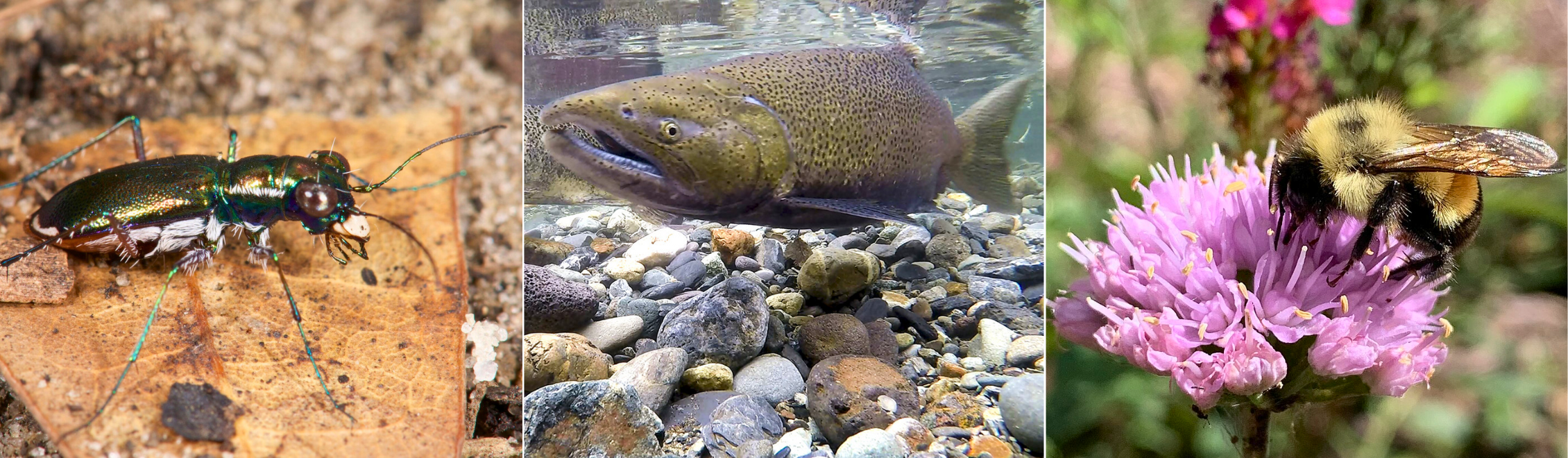
We’ve made a lot of gains against PFAS pesticides. After a court vacated all uses of the bee-killing PFAS pesticide sulfoxaflor in 2015, EPA later re-registered new uses on blooming plants, so the Center and allies sued — winning an order for the EPA to protect endangered species from this toxic insecticide. The EPA itself found that sulfoxaflor likely harms hundreds of endangered species, including Miami tiger beetles and rusty patched bumblebees.
Thanks to a Center suit, a court ordered the EPA to address the endangered species harms of the pollinator-toxic PFAS flupyradifurone (an insecticide) and bicyclopyrone (an herbicide), along with two other toxic pesticides. And following another suit by the Center and our allies, chemical giant BASF agreed to stop manufacturing and selling the PFAS pesticide trifludimoxazin, which the EPA had registered for use even after finding that it “will likely cause severe harm” to threatened and endangered fish, including endangered populations of Chinook salmon and steelhead trout, Atlantic sturgeon, and smalltooth sawfish.
In the first year of the second Trump administration, it went on a new PFAS pesticides approval spree, proposing to approve five new PFAS pesticides and finalizing its approval of two. The Center sued the EPA over its approval of isocycloseram, one of the new PFAS pesticides that’s especially toxic to bees. And its harms to humans are nothing to sneeze at either — for example, it’s been found to shrink testicles.
We’re always working hard to watchdog the EPA’s pesticide office, spread the word about its dangerous approvals of PFAS pesticides, and counter the spread of misinformation about these frightening chemicals.
Check out our press releases to learn more about the Center's actions to save people and wildlife from PFAS pesticides.