
Climate planning empowers colleges and universities to take responsibility for their contributions to the climate crisis. It builds resilience in the face of increasing threats from extreme weather, wildfire, floods, and other climate-related disasters. As climate plans attempt to address their community’s needs, they can either perpetuate existing inequities or help dismantle them.
Rising greenhouse gas emissions, and the resulting extreme weather events, affect us all but fall disproportionately on women, trans and nonbinary people, and Black, Indigenous and people of color. Climate plans must explicitly address these inequities — and their upstream drivers — in order to counteract them.
Not doing so means failing to take care of communities, leaving behind vulnerable populations, unnecessarily increasing pressure on health and social service infrastructure during disasters, and weaking the overall fabric of campus communities.
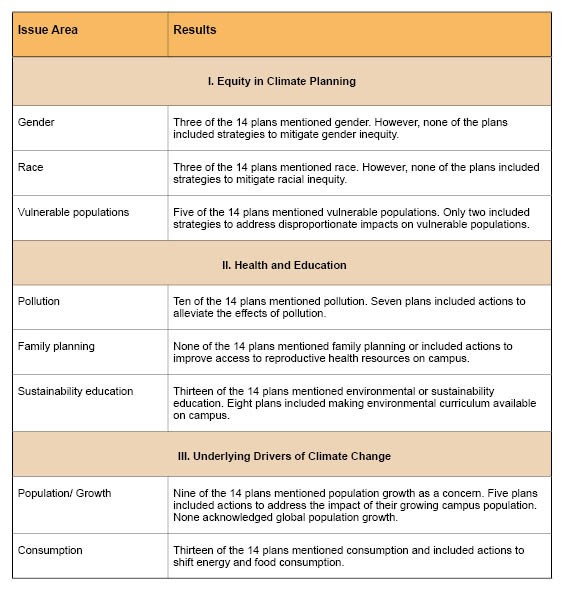
To learn if college and university climate plans include the disparate harms and underlying causes of the climate crisis, the Center for Biological Diversity reviewed 15 higher education climate plans from colleges and universities across the United States with wildlife mascots. In the wild, many of these species are facing the threat of extinction due to habitat loss and climate change. Climate plans were analyzed for their inclusion of several key issue areas along with often overlooked Scope 3 emissions that intersect with the impacts of the climate crisis.
Three main themes emerged: Equity in climate planning, health and education, and underlying drivers of climate change. The plans were analyzed for the frequency and strength of their inclusion of the following topics: gender, race, vulnerable populations, population growth, consumption, pollution, family planning and sustainability education.
There’s a growing body of research showing that gender and racial inequity are exacerbated as the climate crisis worsens. The absence of these issues from university climate plans mirrors their lack of representation in municipal climate plans, as seen in the Center’s 2022 report, Gender and the Climate Crisis: Equitable Solutions for Climate Plans.
By adopting the recommendations below, universities can create comprehensive and effective climate plans that address the multifaceted challenges of climate change and build stronger communities and healthier environments that meet the needs of all populations.
MEDIA & PUBLICATIONS
JUSTICE & POLICY POSITIONS
LEARN MORE
Contact: Malia Becker


