The Ugly Truth About Rigs-to-Reefs
The Rigs-to-Reef Myth: Ocean Blight Disguised as Conservation
Oil corporations and sportfishing lobbying groups have long championed a program called “Rigs-to-Reefs” as a win-win for industry and the environment. Don’t be fooled. Here’s what you need to know about why letting oil companies leave their old junk in the ocean is a false solution.
What is the Rigs-to-Reefs program?
“Rigs-to-Reefs” is a program by the U.S. Department of the Interior that helps wealthy oil corporations profit even more by letting them abandon their ancient oil platforms in the ocean instead of paying to fully remove them.
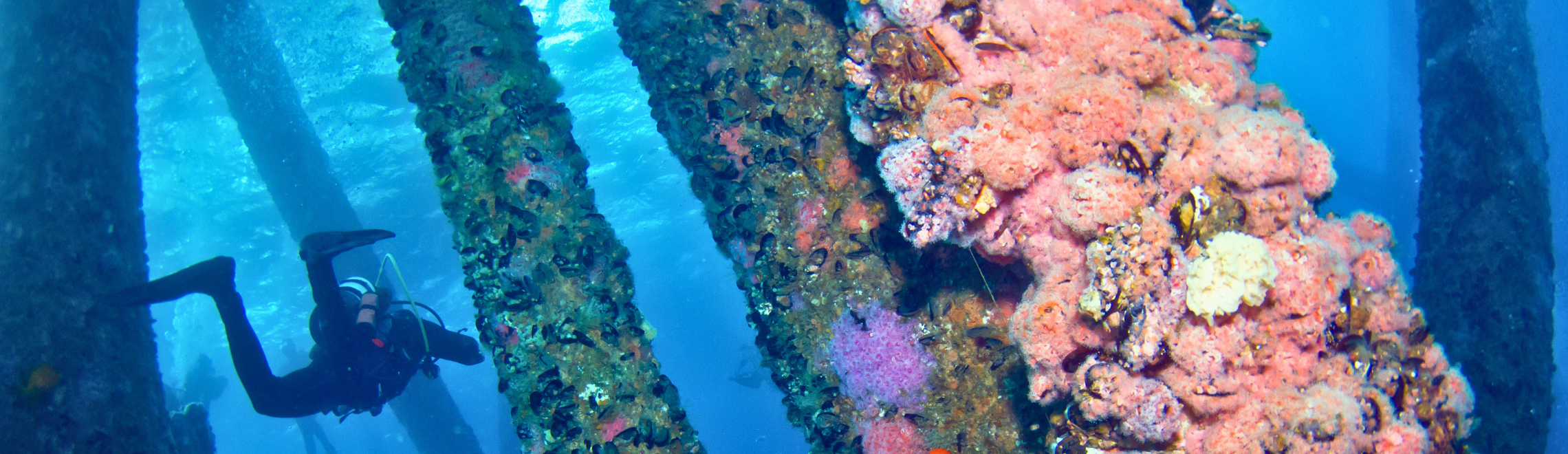
Ostensibly, the abandoned infrastructure acts as artificial reefs, since sponges, algae, and other marine organisms will inevitably attach themselves to underwater structures. But these old platforms are really just hunks of rusting metal that don’t belong in ocean ecosystems.
Developed in partnership with fossil fuel companies in the 1980s, the program is a massive benefit to Big Oil. It saves oil companies millions of dollars in decommissioning costs, absolves them of long-term risk, and frees up cash to invest in new drilling projects that will lead to more oil spills and climate chaos.
How does it work?
When an old offshore platform is accepted into the Rigs-to-Reefs program, the oil company “donates” it to the neighboring state’s artificial reef program. The company will either topple the platform where it is, remove the top part of the structure and leave it on the seafloor or tow it to shore, or sever the whole structure from the ocean floor and move it to a new location.
The state accepts long-term environmental risk and responsibility for monitoring and maintaining the defunct platform. If the structure collapses, is damaged by a storm, or injures someone, the public — not the oil company — will be responsible for the damages.
In other words, the program shifts liability for these aging structures from fossil fuel companies to the public.
Is Rigs-to-Reefs actually good for the ocean and biodiversity?
In a word: No.
Oil platforms are industrial structures designed to extract fossil fuels — not to support marine biodiversity. In fact, the sprawl of thousands of platforms across the Gulf of Mexico has contributed to invasions of nonnative species, like lionfish and cup corals, and may worsen harmful jellyfish population explosions.
Research clearly shows that old platforms can act as stepping stones for invasive species. For example, a federal ecological assessment of High Island Platform 389-A — abandoned in the Flower Garden Banks National Marine Sanctuary off Texas — found that invasive orange cup coral is the most abundant coral species on the rig, while very few native coral species live there. The study also documented invasive fish species on the platform.
Another federally funded study found no overall evidence that toppling platforms enhanced reef-forming corals, increased coral abundances, or created complex reef-like fish habitat. The same study also found that invasive orange cup coral thrived on toppled platforms.
Sport fishers back the Rigs-to-Reefs program because oil platforms attract certain fish species. But that doesn’t mean the platforms serve the same ecosystem functions as a natural reef.
How many oil platforms have been abandoned through the Rigs-to-Reefs program?
Hundreds. The most recent count, in 2024, reported 600 oil platforms abandoned in the ocean as part of the Rigs-to-Reefs program. The U.S. Bureau of Safety and Environmental Enforcement reports denying only six Rigs-to-Reefs proposals since 1986.
Most of these rigs are in the Gulf of Mexico off the coast of Louisiana, which has accepted more than 400 offshore and deepwater structures into its artificial reef program. In California, no platforms have become part of the program.
How can we stop the harms of this program?
The best way to protect the corals, whales, and fish who depend on clean oceans to thrive is to stop drilling for oil altogether. The Rigs-to-Reefs program leaves money in the pockets of oil corporations to invest in new drilling — money they should be spending to clean up our oceans.
The Gulf of Mexico is already an oil and gas junkyard, with thousands of wells that need to be plugged and hundreds of platforms that need to be removed — not left to decay in natural ocean habitat. The Interior Department should hold companies accountable for fulfilling their decommissioning obligations instead of finding ways to save them money and greenwashing it as a conservation measure.
Learn about the Center’s No More Deadbeat Drillers campaign.
And check out our press releases to read about our actions to save oceans from Rigs-to-Reefs.