The global system of industrial animal production, including industrial fishing and intensive aquaculture, is a key driver of the extinction crisis, air and water pollution, climate change, exploitation of workers and animals, harm to local communities, and threats to public health.
The Center for Biological Diversity has joined more than 100 organizations around the world to unite around a common vision of food system transformation from seed to fork that protects and empowers farmers, farm workers, and food-chain workers and makes a livable future on our planet possible.
Learn more about the Just Food Transition Network.
The U.S. food system urgently needs a just transition from the factory farm model and the overproduction and high consumption of animal products in the United States to an equitable and sustainable food system that supports healthy and affordable plant-rich diets. The U.S. Just Food Transition Roadmap provides the framework for collaboration across movements to build power and momentum for a just food transition, focusing on the role of governments and public policy.
The U.S. Just Food Transition Roadmap
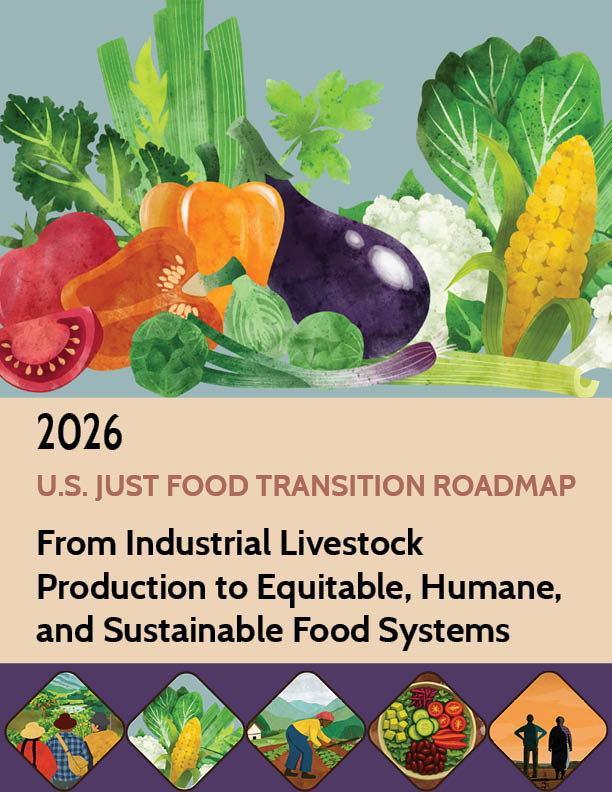
The roadmap envisions a U.S. food system that prioritizes sustainable, nutrient-dense food production with greater dependence on and support for whole and minimally processed plant foods at all levels; provides everyone access to adequate nutritious, affordable, and culturally appropriate foods; supports fair prices for farmers; adheres to strong sustainability and worker protection standards that ensure workers’ rights as human rights; strengthens food sovereignty; and significantly reduces the number of animals killed and wild habitats destroyed for food.
Economic and political priorities must be shifted away from industrial agriculture and overproduction of animal products and feed crops toward increasing corporate accountability, promoting agroecological practices, and advancing sustainable, plant-rich diets.
The roadmap reflects a range of ambitious and necessary public policy changes, including some that may not yet be available, to engage food policy stakeholders (including farmers, food-system workers, policymakers, local communities, nonprofits, and others) in advancing our shared vision.
Understanding the U.S. Food System to Catalyze Change
If you represent a U.S.-based organization that does work related to food system transformation and would like to endorse the roadmap, please fill out the endorsement form at this link.
Contact: Stephanie Feldstein


