Pernicious Pesticide
Atrazine's Growing Threats to Drinking Water, Rivers, People, and Wildlife
A Center for Biological Diversity Report, September 2026
Executive Summary
Atrazine is one of the most widely used pesticides in the United States, with about 70 million pounds deployed nationwide each year. It's also the most widespread pesticide contaminant in U.S. water bodies and so dangerous to both people and wildlife that it has been banned in more than 60 countries across the world. Atrazine is primarily used on industrially grown commodity crops like corn, sugarcane, and sorghum.
Numerous studies have provided overwhelming evidence linking it to significant human health concerns, including increased risk of many types of cancers and reproductive problems. It's also linked to declines of amphibians and fish. Exposure at levels as low as 0.1 parts per billion (ppb) has been shown to harm reproductive organ development in frogs, potentially leading to population-level impacts. The current allowable level of atrazine in human drinking water is 30 times higher than this, at 3 ppb.
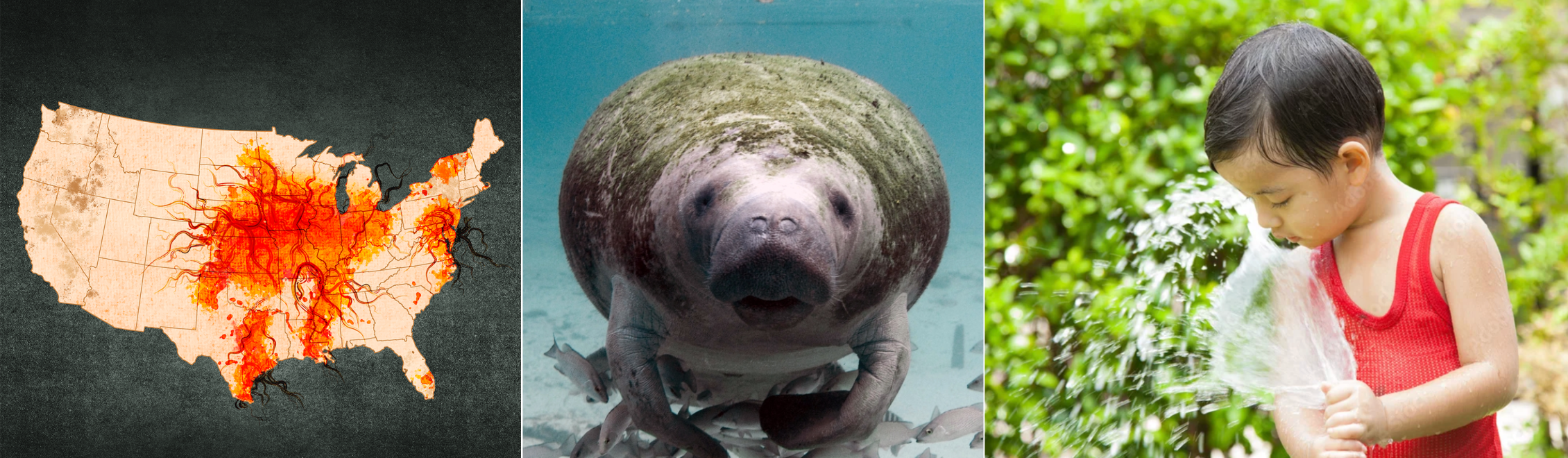
While atrazine’s harms are well known, the true scope of atrazine pollution in the United States has not been widely publicized and remains largely unknown to the general public. For this report we analyzed both water-monitoring and modeling data compiled by the Environmental Protection Agency to identify waterways across the nation that are contaminated with harmful levels of atrazine. These affected networks of lakes, rivers, and streams provide essential drinking water to millions of Americans every single day. Beyond drinking water, they are also used for crop irrigation, public recreation, wildlife habitat, and many other purposes.
Key Findings
In addition to mapping the vast scope of nationwide atrazine pollution, we identified five hotspots with some of the highest levels of atrazine contamination in the country:
1) Chesapeake Bay
2) Midwest Corn Belt
3) Lake Okeechobee
4) Lower Mississippi River
5) Texas Gulf Coast
Recommendation
Atrazine is single-handedly making clean water unavailable for a large portion of the U.S. population and posing long-term dangers to people and wildlife in affected areas. The Environmental Protection Agency, which is right now in the process of considering reapproving this pesticide, should follow the lead of five dozen countries around the world and implement a permanent ban on atrazine.
Read the report PDF in a new tab.