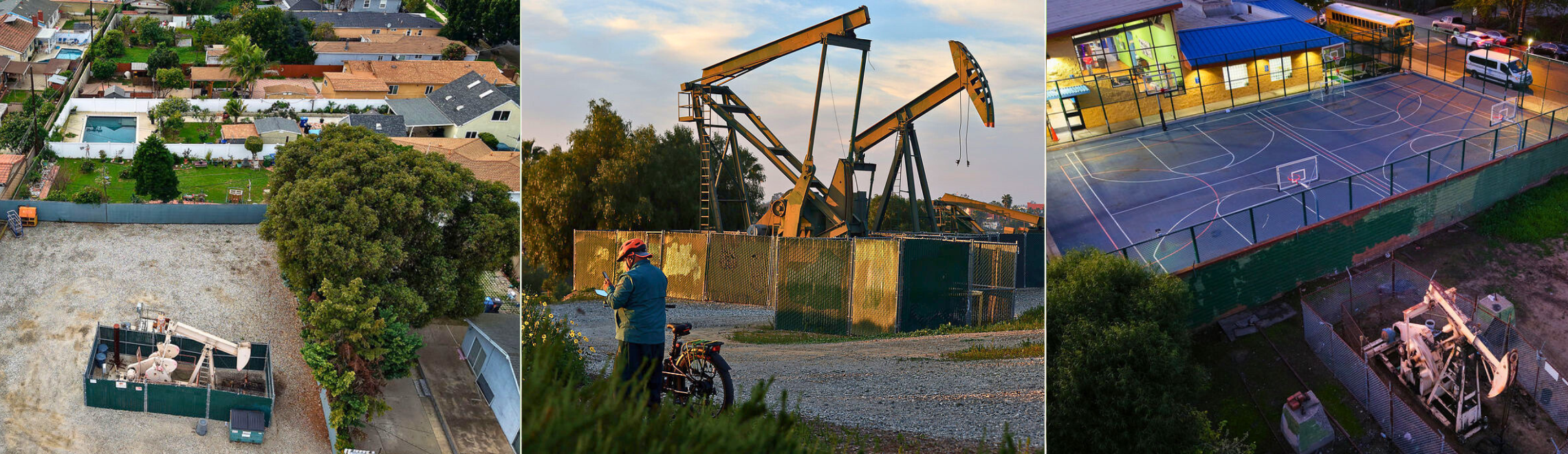
Idle Wells, Active Threat
California Schools, Hospitals, and Playgrounds in the Shadow of Unplugged Wells
California has more than 30,000 idle wells that are unplugged but no longer produce oil or gas. Idle wells threaten our safety, health, and climate.
An analysis of state data by the Center for Biological Diversity found that nearly 3,800 schools, healthcare facilities, eldercare centers, and playgrounds are concerningly close to at least one idle well, putting the most vulnerable Californians at risk.
Idle wells can leak climate-polluting gases like methane — explosive at high concentrations — as well as toxic chemicals like benzene, which is linked to several kinds of cancer.
Check out our interactive map to see if your school, local park, or healthcare facility is close to an idle well:
To see the map legend, click the icon in the upper left. To get information on idle wells and local facilities, click a feature in the map (e.g., dot, building icon, or green space). To enter a full-screen map, click one of the top two icons in the lower right. To zoom in or out, click “+” or “-” (or use your mouse pad). Click the home icon to zoom out again. To search for a zip code, city, or address, click the magnifying-glass icon on the right, enter your details, and hit return or enter (and zoom out again, if needed, to see nearby wells).
Of the more than 30,000 idle oil and gas wells in California, at least 4,449 are within 3,200 feet of a school, hospital, playground, or eldercare center. These places are meant to be safe, so the state has prohibited new oil and gas drilling within a 3,200-foot “health-protection zone.”
Yet thousands of wells remain idle within health-protection zones across California.
Oil and gas companies are legally required to plug their wells — estimated to cost $21.5 billion statewide — but they’ve provided just $106 million in bonds for onshore plugging. That leaves California taxpayers potentially on the hook for billions.
State lawmakers have made progress in requiring oil and gas companies to clean up their idle wells, but California needs to do more to speed up the pace, prioritize cleanup near the 3,787 sensitive sites close to idle wells, and ramp up methane monitoring in health-protection zones.
Highlighted Places at Risk
We’ve mapped and compiled factsheets about the top California counties and their idle-well threats. Scroll down for a factsheet on the whole state.

Kern County, home to most of the state’s oil and gas drilling, has 126 schools, healthcare facilities, playgrounds, and eldercare centers within 3,200 feet of at least one idle well, putting more than 16,000 schoolchildren at risk.

Los Angeles County has at least 2,455 schools, healthcare facilities, playgrounds, and eldercare centers near one or more idle wells, putting more than 230,000 schoolchildren at risk.

Ventura County has 119 schools, healthcare facilities, playgrounds, and eldercare centers near one or more idle wells. Nearly 12% of the county’s idle wells have been idle for more than a century.

Santa Barbara County has at least 24 schools, healthcare facilities, playgrounds, and eldercare centers within 3,200 feet of at least one idle well.

Monterey County has at least 474 idle wells — a shocking 97% of which are located on top of groundwater sources, which provide drinking water to residents and irrigation water for farmers.

In California, 4,449 idle wells are concerningly close to nearly 3,800 schools, childcare centers, eldercare centers, hospitals, parks, and playgrounds. These unplugged wells put children, seniors, and patients at risk — yet oil and gas companies statewide have provided bonds for less than 1% of the money needed for their cleanup.