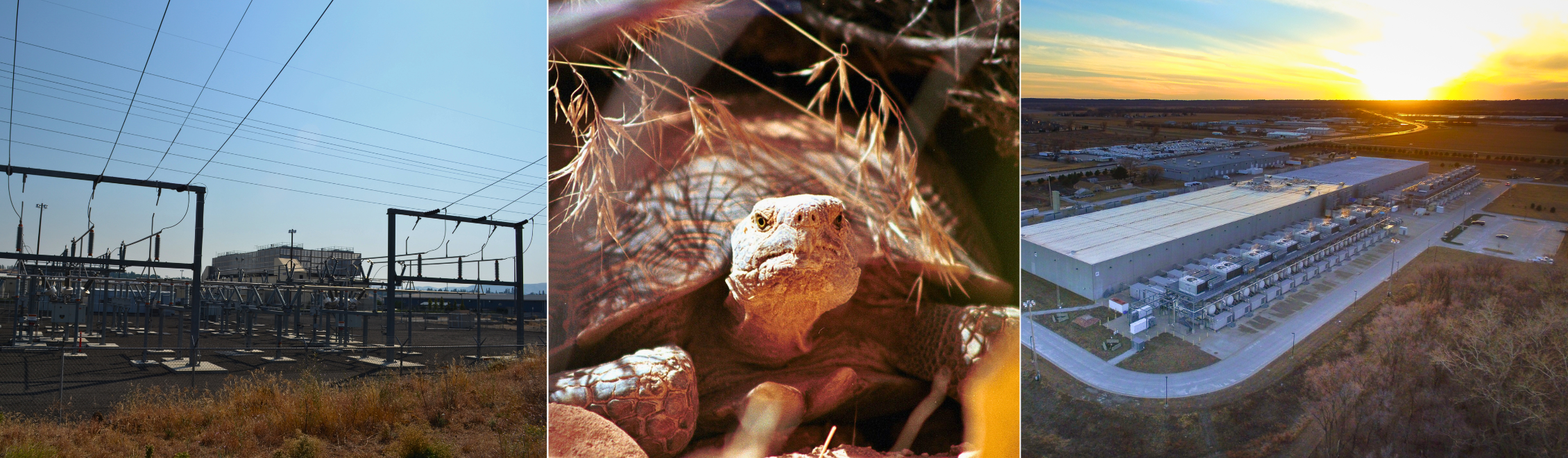
Data Centers
The boom in data centers — primarily powered by fossil fuels — has inundated communities across the United States. These massive industrial projects to power artificial intelligence applications have massive consequences for our air, water, and climate and leave us with higher utility bills. Carbon emissions from the industry’s rapid growth could triple by 2035, risking public health and undermining U.S. climate goals.
We desperately need strong regulatory guardrails to keep data center growth in check.
How Does AI Hurt the Environment and People?
Energy Consumption
AI data centers use a staggering amount of electricity. A typical one uses as much electricity as 100,000 homes. But some of the larger operations being built today can consume even more — in fact 20 times as much.
Toxic Pollution and Climate Harm
To power data centers’ insatiable electricity demand, the industry is using fracked gas and coal. Producing and burning fossil fuels pollutes the air with dangerous toxics like benzene and particulate matter 2.5.
Powering data centers with dirty fossil fuels also means more climate pollution. In 2035 data centers are expected to produce 350 million metric tons of carbon emissions, about the same amount as Italy’s total emissions in 2023. A worsening climate emergency means more extreme heat, flooding, and other climate-fueled disasters.
Water Waste
The industry uses an enormous amount of water. Even in drought-stricken communities, data centers are draining local water supplies to cool down operations, often without water efficiency or recycled water requirements.
Bad Land-Use Decisions
Decisionmakers have been slow to hold the industry accountable, making poor land-use decisions that put communities at risk. Data centers and the infrastructures that support them are being proposed and built near schools and on the home turf of endangered species. For example, in Alabama a proposed data center would not only pollute a rural community near Birmingham but destroy the last remaining habitat for Birmingham darters, an imperiled fish species.
What’s It Like to Live Near a Data Center?
Once a data center is built nearby, there goes the neighborhood.
People’s utility bills are increasing because of data center growth — even while higher electricity rates are subsidizing data center infrastructure. Instead of protecting ratepayers, utility companies are raising rates to pay for new gas power plants and pipelines to meet data center demand, oftentimes as part of a bid to attract data centers without successfully winning the bid. Cities and states are offering tax breaks for data centers while the people within them are left with the tab.
And these polluting operations aren’t just bad for air quality and water. They also make noisy neighbors — servers inside them can be extremely loud, operating 24 hours a day. Many communities with data centers have pushed back, demanding noise-code limits or other harm-reduction measures.
It’s time for decisionmakers to step in to protect the environment and communities.
Our Campaign
The Center uses scientific research, strategic litigation, and campaigning to challenge the environmental harms of data centers across the United States.
In 2025 Center scientists unveiled our research quantifying U.S. data center carbon emissions at the COP30 climate talks in Brazil, sparking new momentum to tackle this growing threat. According to the Center’s report Data Crunch, data centers are expected to account for more than 12% of U.S. electricity consumption by 2030.
At the federal level, we’re pushing Congress to set up guardrails as the Trump administration works to fast-track data centers and remove environmental and consumer protections.
And we work at the state and local levels too. As the administration continues to make things easier for AI polluters, state and local lawmakers have an important responsibility to keep data centers in check. We challenge destructive projects that are approved without scrutiny and can cause irreversible harm.
In California we’re tracking new data centers proposals and raising alarms about potential environmental and community impacts. We reached an agreement with the city of Pittsburg to require rooftop solar, electric vehicle infrastructure, and recycled water for a proposed data center. Such commonsense measures are important but aren’t always required by decisionmakers in a no-rules industry. We’re also challenging the use of mega-polluting diesel generators for existing data centers.
We joined a coalition with Nevada residents in stopping the first data center approved on U.S. federal public land (which is also habitat for desert tortoises).
In New Mexico we’re challenging Project Jupiter, one of the country’s largest proposed data centers, which would be powered by Permian Basin gas. We’re also challenging the private equity takeover of the state’s largest public utility to cash in on the AI data center boom. In Minnesota we’re working with grassroots organizations to pass a data center moratorium and put an end to tax incentives for the industry.
Check out our press releases to learn more about the Center’s actions to fight the data center boom.