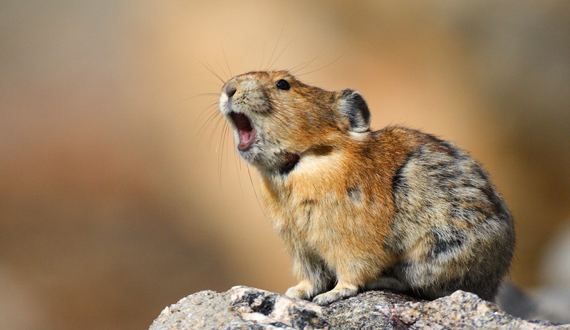
SAVING THE AMERICAN PIKA
The American pika — a small, herbivorous, conspicuously cute mammal related to rabbits and hares — is adapted to the cold climate in high-elevation boulder fields and alpine meadows in the mountains of the American West. But the very adaptations that have allowed this species to survive make pikas extra sensitive to the changes wrought by global warming.
BACKGROUND
Rising temperatures threaten pikas by shortening the period available for them to gather food, changing the types of plants in the alpine meadows where they feed, shrinking the size of alpine meadows, and reducing insulating snowpack that protects them from cold snaps in the winter. Most directly, warming can also cause the animals to die from overheating.
Protecting the pika as endangered would help protect the species from direct harm and would also require the protection of the habitat necessary for the pika's survival and recovery. Just as importantly, the species' protected status would be a strong call to action against global warming.
OUR CAMPAIGN
To save the pika from demise, in 2007 the Center petitioned the state of California to list the state's five American pika subspecies as endangered under the California Endangered Species Act. Sadly the California Fish and Game Commission, after multiple times being forced into court by the Center to reconisider the pika for protection — and even once convinced to designate the species as a “candidate” for protection — in 2013 the agency voted not to protect it under the state's Endangered Species Act.
To protect the pika on the federal level, we petitioned the U.S. Fish and Wildlife Service to list the full species as federally endangered (also in 2007). After the Fish and Wildlife Service failed to take action, we hauled the agency to court in 2008. But despite clear scientific evidence that the pika is threatened with extinction by global warming, in early 2010 the Fish and Wildlife Service declared it would not protect the species.
The Center won't stop fighting for this tiny mountain mammal.