
For Immediate Release, January 8, 2026
|
Contact: |
Camila Cossío, (971) 717-6427, [email protected] |
Lawsuit Challenges Failure to Protect Imperiled Southwest Turtle
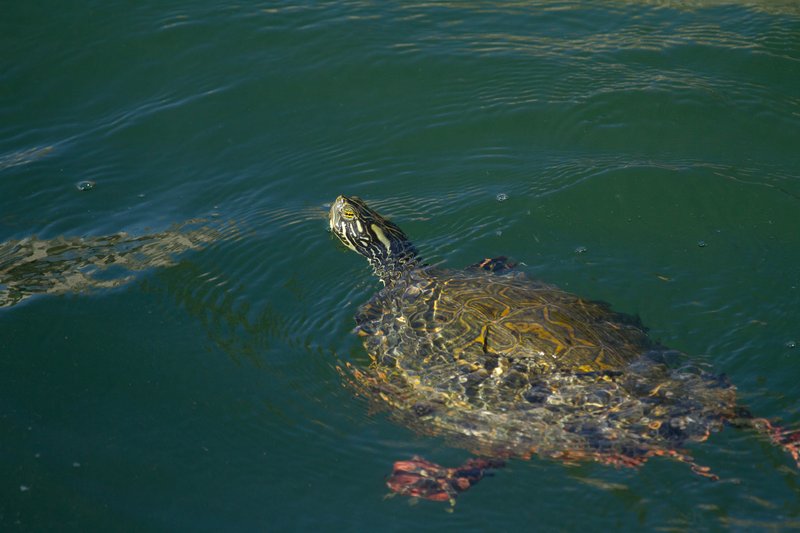
WASHINGTON— The Center for Biological Diversity sued the Trump administration today for denying Endangered Species Act protections to the Rio Grande cooter. These shy freshwater turtles have a fragmented range across the Pecos, Rio Grande and Río Bravo river basins in New Mexico, Texas and northeastern Mexico.
Named after the mighty Rio Grande River, the cooter is a basking turtle, meaning it sits on logs and rocks to soak up sunshine. The places in the Southwest where the turtles survive are experiencing devasting climate change effects like abnormal periods of drought, flooding and extreme heat.
“The extinction of these irreplaceable turtles would cost the Southwest a vital piece of natural heritage, so it’s shocking that federal officials failed to protect them,” said Camila Cossío, an attorney at the Center for Biological Diversity. “Rio Grande cooters are threatened by climate change, unsustainable water usage and the oil industry’s influence, but we can save them with Endangered Species Act protections.”
Today’s lawsuit was filed in the U.S. District Court for the District of Columbia.
In 2022 the U.S. Fish and Wildlife Service determined that the Rio Grande cooter does not warrant Endangered Species Act protections, even though the agency’s own projections show threats to the turtle are expected to continue and worsen. The turtle’s watersheds are in crisis from unsustainable levels of surface and groundwater usage, which is magnified by rising temperatures.
“These turtles are especially vulnerable because they mature late and youngsters need many safe and healthy years to survive into adulthood,” said Cossío. “In Mexico there is no evidence of young turtles at all and they’re disappearing in Texas too.”
Populations will collapse without a healthy number of young turtles. Scientists have cautioned against falling into shifting baseline syndrome: The decline of the Rio Grande cooter could be overlooked because people born into a world with fewer turtles perceive low numbers as normal even though there’s actually a serious problem.
Like many turtles, the Rio Grande cooter is also increasingly threatened by collection for trade. Trade data shows a massive increase in exports since 2017, and there is no indication that demand has slowed. U.S. wildlife is a major source for the international pet trade. A recent Center report documented 8.7 million reptiles exported from the United States over an 8-year period, most sourced directly from the wild.
Although the turtles are listed under Mexico’s endangered species list, that listing provides no protections against the threats facing the turtle. Other threats include a loss of connectivity between populations due to habitat degradation from development and industry, alterations in river flow resulting from dam construction, increased salinity, increasingly low water quantity, pollution and direct mortality. Increased temperatures may be feminizing eggs and leading to a less genetically diverse population.
All of these threats harm Rio Grande cooters at every stage of their lives, and they are all projected to continue unless the turtles receive Endangered Species Act protections.
The Center for Biological Diversity is a national, nonprofit conservation organization with more than 1.8 million members and online activists dedicated to the protection of endangered species and wild places.
